I always looked forward to Thanksgiving with impatience. For some, it’s just a long weekend, gifts, walks, or meeting friends. For me, it’s an entire ritual — a way to feel part of my family’s history, to sense a bond with my grandmother, with her recipes and the care she passed down to me.
A few days before the holiday, I would take out my grandmother’s old recipe cards. Yellowed, with bent corners, stained from hands and grease — traces of our shared work. Her careful, slightly slanted handwriting seemed to whisper, “I’m here, and everything will be alright.” Holding those cards felt like touching the warmth of her care and understanding that I was continuing her legacy.
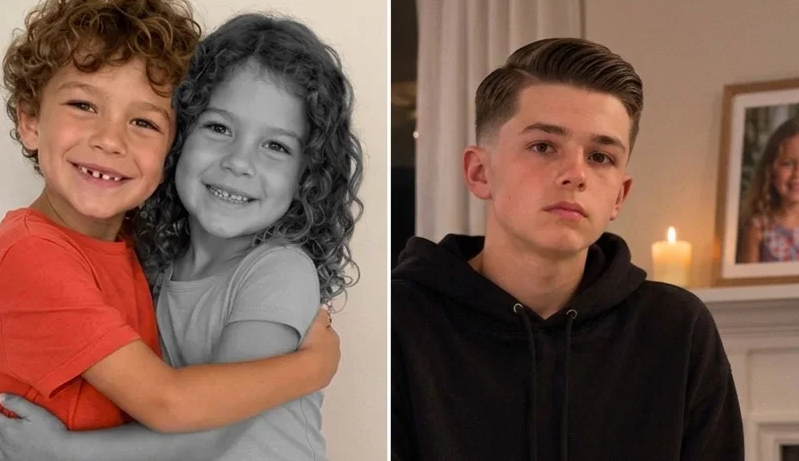
My children, Lili and Max, always eagerly take part in the preparations. Lili carefully decorates the table, draws small name cards, arranges the napkins, and checks that the candles are standing straight. Max pretends to be “too grown-up” for such tasks, yet he still tastes every cake, chuckles quietly when I lose patience over flour on the floor, and loudly comments on the flavors of the sauces. These little moments make the holiday alive, real, full of laughter and warmth.
I start cooking as early as Monday. Pie dough, purée, turkey marinade, casseroles, sauces — every element is planned in advance. I put on ’90s music, hum along, the kids run around, taste the fillings, sometimes knock something over, but we laugh together. The house fills with aromas: garlic, butter, roasted squash, and turkey — scents that take me back to childhood, to my grandmother, to home, to the heart.
For me, cooking isn’t just a way to feed my family. It’s a language of love. Every ingredient, every movement of the spatula or whisk is my way of saying “I love you” without words.
My relationship with my mother-in-law has always been difficult. Elaine loves to impress, to shine, and to draw attention. Cooking isn’t her thing; she hardly ever cooks. But during the holidays, she shows up — sometimes “just for a moment,” as she puts it. In the past, it was limited to small things: taking some food “for friends” or “for later.” I tried not to pay attention so as not to spoil the mood, even though a bitter aftertaste always remained inside. My husband Eric usually said, “Don’t worry, that’s just how she is,” and I agreed.

This year, I decided to do things differently. I poured my whole heart and energy into cooking. Every dish was carefully prepared, every detail thought through. By Thursday, the table looked perfect: a white tablecloth, neatly arranged plates, linen napkins, candles, small name cards made by Lili. I stood there, looking at the table, filled with pride and quiet joy — everything was ready.
And at that very moment, the front door opened.
Elaine walked in confidently, as if she owned the house. She barely said hello and headed straight for the kitchen, pulling out food containers. I tried to calmly explain that we were about to eat, that it was our tradition, that the children were waiting. Eric stepped in too, but she remained unmoved: “There’s too much food — sharing is normal.”
In the end, she took a large portion of the prepared meal. I stood there in silence, feeling all my effort and care slip away — every pie, every sauce I had poured myself into. It wasn’t just disappointment — it was the feeling that your efforts and care don’t matter to anyone.
I remembered my grandmother and her quiet advice: “In a family, care and attention for one another matter, even if someone doesn’t understand it right away.” In that moment, I knew my grandmother would have been on my side, but she also taught me to forgive and to value myself.
With the children, we decided to keep the holiday. We reheated a simple meal, lit the candles, and sat together. I explained to them that sometimes adults act selfishly, but it shouldn’t take away our warmth and gratitude. They tried to joke and laugh, and that helped me focus on what truly mattered. Seeing my composure, Eric quietly placed his hand on my shoulder and said, “We create the holiday for our family ourselves.”
Later, I learned that her new acquaintance was vegan, and what she had taken turned out to be completely unsuitable. The container with the turkey spilled onto the floor, the sauce spread everywhere, and her evening turned into chaos. She was upset, shifting the blame onto others. I realized it wasn’t malice — just a habit of acting in whatever way suits her, without considering other people’s efforts.

I sat down on a chair in the kitchen and closed my eyes. My heart ached, but I focused on what I had: my husband, my children, our home. I remembered my childhood, my grandmother’s cakes, her advice about how important it is to measure ingredients with love and patience. True value lies in effort, care, and attention to detail — not in whether someone appreciates it.
Eric supported me. We calmly discussed the situation and set boundaries: respect for our home, our traditions, and my work is not up for debate.
The following weeks passed peacefully, without unexpected visits or tense conversations. When a message arrived demanding an apology, I understood that I could only move forward with conscious respect and understanding.
We spent Christmas at home. A warm evening: cocoa on the stove, the children watching a movie, snow outside. Simple joy — the kind I value most. I held the children close, my husband’s hand in mine, and felt it clearly: this is real — our family, our traditions, our feelings.
This Thanksgiving taught me several important things:
Sometimes people take more than they give, but that’s no reason to lose yourself.
The true value of a holiday isn’t in the dishes or the table setting, but in care, attention, and love.
Boundaries, self-respect, and calm are stronger than any external pressure.
My effort, my love, and my care deserve respect. Not from everyone — but from those who are willing to appreciate them.
Next Thanksgiving, we’ll do what brings us joy. We’ll cook together, laugh, create memories — without unnecessary tension, without fear that someone might “take away” our warmth. That feeling of freedom, respect, and a true celebration — nothing can replace it.